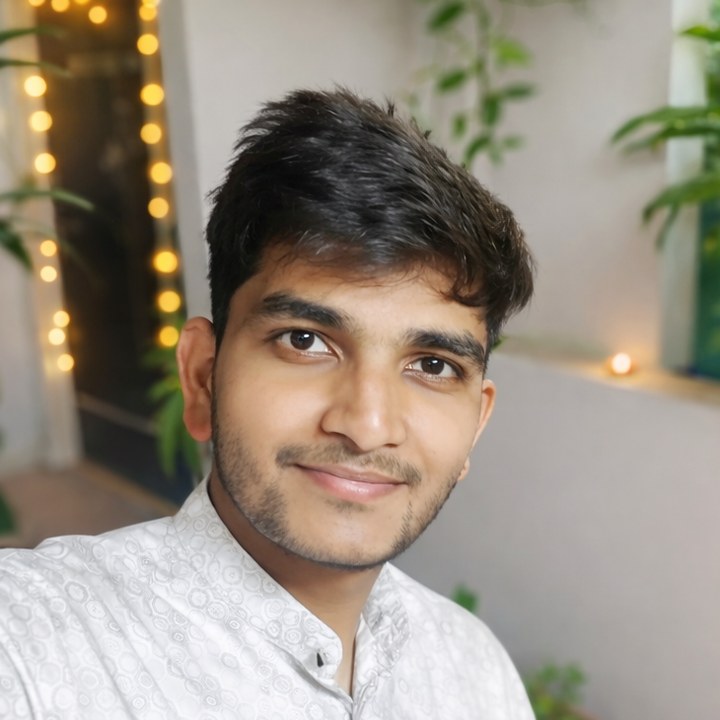
Hello, my dear readers!
In the last week of August 2022, our team boarded a train to Namakkal, Tamil Nadu, for the Grand Finale of the Smart India Hackathon (SIH). Everything about it was new to us. I had never been on such a long train journey before, and the excitement of the trip was matched only by our nervousness about what lay ahead.
I'll tell you the ending right away: we didn't win. But we didn't lose either. We gave it our best until the very last moment, and I truly believe that those who try their best till the end are never losers.
So why am I writing this? Because we made mistakes along the way, and I want our juniors to learn from them instead of repeating them. If even one future SIH team reads this and avoids our pitfalls, this article will have done its job.
THE ROAD TO THE GRAND FINALE
The journey began in March, when SIH was announced and the problem statements were released. Each team had to pick one problem statement, and the finale was scheduled for August.
A huge number of students from our college took part. First came an internal college round, from which a few teams were selected, and ours was one of them. In the second round, we presented our project to industry experts, and to our delight, we were shortlisted for the Grand Finale.
Just when things were looking up, we hit our first major setback. Our team leader, who had been working with incredible enthusiasm, got admission to IIIT Hyderabad for further studies and had to leave our college. We had to choose a new team leader and bring in a new member to fill the gap.
It would have been easy to lose momentum, but we didn't. We kept working on the project for entire days under the guidance of our mentor. By the time August arrived, we were ready with our project and set off for the finale at Pavai Engineering College in Tamil Nadu.
The campus was beautiful, the volunteers were incredibly hardworking, and the event was very well organised. We felt ready.
THREE ROUNDS, THREE CHANCES
The finale had three rounds. In each one, we presented our project, and the judges asked us to make changes to our code before the next round.
Round 1: A shaky start
Our first presentation did not go well. Someone told us that the first presentation is the one that really counts, and in our case it certainly felt that way. Still, we refused to give up hope.
Looking back, I can name our biggest mistake clearly: we spent too much time watching how other teams were presenting instead of focusing on our own work. The judges asked us to modify our code, and we got to work.
Round 2: Finding our feet
The next day, we walked in with the modified code, and this time the judges were noticeably more interested in our project. They asked us to modify the code once again, and we pushed ourselves to give our best till the very last moment.
Round 3: So close
For the final presentation, we had made every change the judges asked for. This time they genuinely appreciated our work. They told us, "Your future is bright. You have built all of this from scratch here, without any mentor. That is very difficult, but you have done it successfully."
Those words meant a lot to us. But there was a catch: our final product was not ready, and the judges wanted a finished product. That was our second biggest mistake, and it cost us the win.
THE TEAM THAT DESERVED TO WIN
The winners turned out to be a team from PCCOER, a sister institute of our own college, and they truly deserved it. I had been watching them closely. One of their team members was ill during the event, so busy and worried that the whole team didn't take a single photo. Even so, they delivered a winning final presentation. I heartily congratulate them on a well-deserved victory.
WHAT WE TAKE HOME
We didn't win the competition, but we learned a great deal. I met many new people and got a glimpse of how others live and work. Most importantly, we gained experience, and whether an experience is good or bad doesn't matter. Every experience adds a new lesson to the book of our lives.
For our juniors, here are the two lessons I hope you remember:
- Focus on your own work. Don't get distracted by how other teams are presenting.
- Have a finished product ready. The judges want to see a working final product, not just a promising idea.
I would also like to thank our college for giving us the opportunity to represent it at the national level, and the Government of India for organising competitions like this one.
That's all from my side about this experience. See you in the next article!
Keep shining, keep reading, keep growing, and keep loving.
Thank you very much!
Abhijit Gadhave, SIH Team Member, PCCOE, Pune